
shoes lambada the poet
Friday, May 25, 2012
Yomubatanidzwa


OSAMA
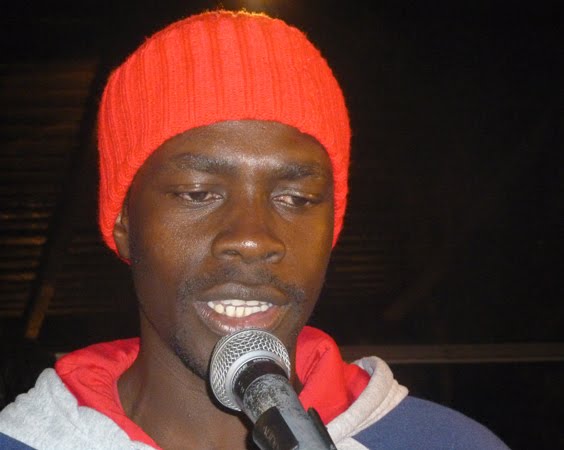
This poem was written by Robson Isaac ShoesLambada soon after the death of Osama bin Laden.
Longer than expected he lived
But longer he remains dead
A female,
Bullet-holed all over her skin
Her body the bullet proof of the male combatant
Osama’s son being bombed to heaven
Just like the twin towers on Septmebr eleven
The globe spinning
The atmosphere changing.
Leaders changing, others falling
NATO Royal Airforce tornadoes targeting,
Libya’s dockyard facilities. Israel vowing,
Never to return to 1967 borders. Netanyahu to Obama in White
House lecturing.
Gaddaffi’s military installations loosening,
SADC Troika on Mugabe tightening
Strauss Khan a hotel maid sexually assaulting:
The Next-French-President tag falling
Pakistan Taliban, Al Qaeda and Saudi Arabia brushing
Tears from their sombre mourning
Faces from morning till morning
Osama: The Afghan Tora Bora fugitive
Equator of democracy to idolatry
America’s headache since Bush
Now that he is dead
Al Qaeda is sad
In Abbottabad as the chopper pierced
The tense, masses fled
The dollar rose,
Oil fell
Stocks rose,
Gold fell.
Economics or Politics?
International law or law of internationals?
Thursday, May 24, 2012
Sunday, July 31, 2011
Duo impresses cross-cultural audience
The duo of Taku Mafika the mbira prince and Shoes Lambada one of the finest poets in the country yesterday sent an audience of more than 150 people into a frenzy at the Annual Intercultural Summer Party held in Munster, Germany held on Sarturday 30 July 2011. The event is an international gathering that happens once every year and this year there were participants from 17 countries mostly from Europe and Asia. African participants were our own pair of Taku Makika and Robson Isaac Shoes Lambada plus three others from Namibia and Morrocco.
The Zimbabwea duo took to the stage soon after a theatre piece from a Polish company had torn the audience into stitchesThey started their performances with Shoes Lambada doing the solo act. He opened the floor with the shona rhythmic “Tariro": a love poem that centres on the traditional way of arranged marriages called kuzvarirwa in shona. In this poem Shoes Lambada depicted a picture where a man is forced to marry a woman who does not have the looks he likes but is reminded of some good elements of those bad looks.
“Vanondiunzira madhuve zigadzi zidema-dema,
zigobvu-gobvu rakanyangara zvinodzinga
vapwere padare hunzi gudo kuipa-kuipa
haro asi haridyi chakafa choga" he recited
He went on to recite “Bound to the Street’ on his own before he called Taku to the stage. The poem of the day was the Osama poem where Taku's mbira was perfectly woven with Shoes Lambada’s verses. The poem was a vivid analyisis of the global atmosphere soon after the death of Osama bi Laden. The situation in the Middle East compared to the situation in New York’s Ground Zero. The poem also explored the other world events that were significant and making the news at that time like the Strauss Kahn scandal, the Libya uprisings and also the economic specualtion that followed as indicated by the rising of the dollar and stocks while oil and gold fell. The jubilant crowd fell in love with the chorus “Longer than expected he lived, but longer he remains dead“.The Al Qaeda leader was responsible for the september 11 attacks on USA where approximately 3000 people were killed.
The other acts they did as duo included "Dzimwe Nguva, Yomubatanidzwa and Dollar for Two" . After the duet performance Taku then took the audience to his personal level with a solo performance. He did some shona folk songs and also some new material from his upcoming album which he is currently working on and also collaboarting with some international artists in Germany. The track "chingungunde" got the audience on the dance floor and it ended while the audience still wanted more. Nevertheless Taku's song of the night was "chikuru rudo". The song became popular last year when he shot a video for the song in Munster. The video featured Aga a polish girl and was directed by Janusz Hamerski, a Polish filmaker who has been resident in Germany for more than 25 years.
The pair does urban mbira and poetry fusion. They have been doing these kind of acts since 2008 . It is not the first time that they have wowed audiences like this. This yera in February they starred during the Black History month celebrations and the are often collaborating at Taku's shows at the Book Cafe and at Shoes Lambada's private functions. On the day they left for Munster they performed in the morning at the Harare International Conference Centre where the UNFPA was commemoration World Population Day.
The Zimbabwea duo took to the stage soon after a theatre piece from a Polish company had torn the audience into stitchesThey started their performances with Shoes Lambada doing the solo act. He opened the floor with the shona rhythmic “Tariro": a love poem that centres on the traditional way of arranged marriages called kuzvarirwa in shona. In this poem Shoes Lambada depicted a picture where a man is forced to marry a woman who does not have the looks he likes but is reminded of some good elements of those bad looks.
“Vanondiunzira madhuve zigadzi zidema-dema,
zigobvu-gobvu rakanyangara zvinodzinga
vapwere padare hunzi gudo kuipa-kuipa
haro asi haridyi chakafa choga" he recited
He went on to recite “Bound to the Street’ on his own before he called Taku to the stage. The poem of the day was the Osama poem where Taku's mbira was perfectly woven with Shoes Lambada’s verses. The poem was a vivid analyisis of the global atmosphere soon after the death of Osama bi Laden. The situation in the Middle East compared to the situation in New York’s Ground Zero. The poem also explored the other world events that were significant and making the news at that time like the Strauss Kahn scandal, the Libya uprisings and also the economic specualtion that followed as indicated by the rising of the dollar and stocks while oil and gold fell. The jubilant crowd fell in love with the chorus “Longer than expected he lived, but longer he remains dead“.The Al Qaeda leader was responsible for the september 11 attacks on USA where approximately 3000 people were killed.
The other acts they did as duo included "Dzimwe Nguva, Yomubatanidzwa and Dollar for Two" . After the duet performance Taku then took the audience to his personal level with a solo performance. He did some shona folk songs and also some new material from his upcoming album which he is currently working on and also collaboarting with some international artists in Germany. The track "chingungunde" got the audience on the dance floor and it ended while the audience still wanted more. Nevertheless Taku's song of the night was "chikuru rudo". The song became popular last year when he shot a video for the song in Munster. The video featured Aga a polish girl and was directed by Janusz Hamerski, a Polish filmaker who has been resident in Germany for more than 25 years.
The pair does urban mbira and poetry fusion. They have been doing these kind of acts since 2008 . It is not the first time that they have wowed audiences like this. This yera in February they starred during the Black History month celebrations and the are often collaborating at Taku's shows at the Book Cafe and at Shoes Lambada's private functions. On the day they left for Munster they performed in the morning at the Harare International Conference Centre where the UNFPA was commemoration World Population Day.
Monday, July 25, 2011
Shoes Lambada and Taku Mafika in Munster

Mbira maestro and tutor Taku Mafika left for Germany together with the Coordinator of Zimbabwe Poets for Human Rights: Shoes Lambada. The two were invited for a two-week conference by a German organisation, Solarnet International.
The two, will spend two weeks with 35 other participants from 18 countries attending the International Reporters’ Conference.
“I am happy to be invited to take part in this international editorial conference comprised of other young people who are very diverse in terms of knowledge, culture, lifestyle and backgrounds, coming together to report about issues that concern young people.
“I know that in my capacity as a musician, I can make a meaningful contribution to my society as well as be diverse in my way of thinking, thus writing more relevant issues when I compose my music,” Mafika said.
The conference brings young people from countries around the world and trains them in journalistic skills in new and traditional media.
Mafika will perform with Shoes Lambada to perform a fusion of mbira and poetry as well as conduct workshops. This is not the first time the two artists will collaborate. This year in February they set the Black History Month Celebration ablaze with their performance at the US Ambassador´s (His Excellence Charlesd Ray) residence.
"The mbira poetry fusion just flows like blood in the veins. Its African and the emotions the mbira bring to the words is amazing. We will definitely rock in Munster" remarked Shoes Lambada
Taku is currently riding high with his new album Dzimwe Nguva which is being sold both locally and globally.On this album he worked with the likes of Alexio Kawara, Willom Tight, the late Sam Mtukudzi and Carmen Hwarari of African Destiny.
The Nyunga Nyunga mbira master will perform alongside the latest crop of mbira students: Diana Samkange, Tererai Mugwadi, Pauline of Mafriq, Tina Watyoka and Willom Tight’s son, Gary.
Wednesday, May 11, 2011
Poets Shine at HIFA

The Harare International Festival of the Arts (HIFA) this year saw poets invading Street as they once did two years ago. This year running under the theme, "The Engagement Party" saw poets performing at the usual HIVOS poetry cafe run by the HIFA consultant Chirikure Chirikure and also perfoming along international artists in Harare's First Street. The street poetry programme saw poets performing alongside Gospel Power, Zimbabwe College of Music Brass Band and also the Dutch rock and roll band "The Moke". The Moke band is very popular in the Netherlands and is based in Amsterdam.
The band also closed down HIFA with a spectacular act alongside the Zimbabwean songbird Chiwonison Maraire. The poets in First Street perfomed alongside this energetic band without boring the audiences. The poets who thrilled the audience in First Street include Thando Sibanda, Mbizo Chirasha, the duet of Robson Isaac Shoes Lambada and Michael Mabwe, Elizabeth Zaza Muchemwawere, VaSadza and the Malawian based Linda Gabriel.
Monday, September 27, 2010


ZPHR, ZGS and CHIMOTO host the Pro-Peace Poetry Party
On Wednesday the 22nd of September, revolutionary poetry and hip-hop movements, Zimbabwe Poets for Human Rights and Chimoto came together to commemorate the International day of Peace. The event was held at the Alliance Francaise de Harare. There was a whooping crowd of more than 100 poetry lovers in attendance. The most unique aspect of the party was the game-no-rules aspect that saw poets doing their stuff with a lof props and costumes and the variety of languages that they used that include shona, english, ndebele, kalanga and shangani.
In partnership also was the Zimbabwe German Society that provided visual artists who were capturing the mood of the verses on canvas. The event was part of the Ukubambana Youth Peace Festival which ran from the 21st to the 25th of September and was being supported by the Zimbabwe Youth Organisations Network.
In partnership also was the Zimbabwe German Society that provided visual artists who were capturing the mood of the verses on canvas. The event was part of the Ukubambana Youth Peace Festival which ran from the 21st to the 25th of September and was being supported by the Zimbabwe Youth Organisations Network.
Wednesday, March 17, 2010
Young Artists in Kadoma Condemn Violence
 zimbabwe poets for human rights member performing
On Saturday the 13th of March youth in Kadoma mobilized themselves to speak on the political violence that engulfed the 27 June 2008 sham election. This comes at a time when the President of Zimbabwe Cde R.G Mugabe announced that next year there shall be elections whether a new constitution is in place or not. Therefore, there are fears that if elections are going to be held under the current constitution, there is a high likelihood of the resurfacing of violence any time soon since there are no electoral reforms to facilitate the holding of free and fair elections.
Poets, theatre actors, dancers and musicians based in Kadoma gathered at Rimuka Hall from 1400hrs to express their dislike of political violence through all forms of art. All artists were in the age range of 11 to 30 years.
The event took a forum format where there were performances and later on discussions to interrogate the content of the artistic performances. 10 members of Zimbabwe Poets for Human Rights (ZPHR) took to the stage denouncing the 2008 election violence followed by theatre performances by Budiriro Cultural Club that vividly exposed the events leading to the 2008 election violence. The discussion forum saw young people agreeing not to be used by politicians in the next elections which Mugabe pronounced that they will be held next year.
The event was organized by Ziyon which is a network of more than 25 youth organizations spread through out the country. Present at the event was the Ziyon Organising Secretary who said, “The 2008 elections left a trail of suffering and mourning and hence there need to be a comprehensive process of national healing for the country to realize lasting peace. These artistic events for peace are being led by ZPHR which is one of the founding members of the network. ZPHR’s co-founder and leading poet Robson Isaac ShoesLambada was also present and assured the
the nation that they shall be going to Masvingo, Bulawayo and Mutare with these events.
Saturday, August 1, 2009
MEMEZA STREET FESTIVAL
 By Ronald Mureverwi
Itai aka Madiz performing with his group above
Scores of people from all walks of life gathered along first street in the city centre of Harare on Saturday 20th of June to commemorate the day in which more than 500 students were killed protesting against inferior education in apartheid South Africa in 1976. The Memeza maiden festival which exploded into dance, poetry, mbira and music was organized by Zimbabwe Poets for Human Rights(ZPHR) in conjunction with MISA Zimbabwe, Contradictions for Arts Development Trust (CADET) and Girl Child Network.
Memeza is a Ndebele word for ‘’speak out, shout ,scream’’. The festival which was held under the theme, “Africa fit for children” rolled into life around 10 00hrs through a live performance by a Mbare dance group Pachedu school of Arts. The audience were treated to an invigorating performance by Zimbabwe’s best young artist among others John Pfumojena, Alexio Kawara, Hope Kakuwe, Itai Madzikure (madiz) and poets from Zimbabwe poets for Human Rights. Also in attendance were school children from various schools.
Takura Mafika from the Mbira society applauded the artist for taking part in the festival and encouraged them not to tire as artist bear the burden of directing issues on addressing the problems facing the nation at large.
Speaking to journalist at the festival Mike Mabwe the coordinator of Zimbabwe Poets for Human rights said he was inspired to honor the Day of the African Child because it symbolizes what the Zimbabwean child is facing today. The youths and children are the hardest hit in the 29 year rule of Robert Mugabe which is characterized by a history of abuse of state resources, corruption, misrule rampant human rights abuses and betrayal of freedom. Zimbabwe once had the best education system in Africa when Robert Mugabe took over power from Ian Smith in 1980, but the last 29 years has been a reversal not only of the sound education system but also the gains of the liberation struggle.
The majority of youths find themselves with nothing to do with unemployment estimated at 95%. Thanks to the state’s lake of diligent priorities the University of Zimbabwe where most of those in government were educated remains closed because of lack of water and dilapidated infrastructure.
Commenting on the role of the media, Tabani Moyo the advocacy officer of MISA Zimbabwe encouraged the inclusive government to move swiftly to address the deliberate moves of maintaining ZBC’s monopoly over the air waves. “On this fateful day 33 years ago, the African Child sow a seed of courage by clearly expressing that he/she could no-longer stomach the unjust society they were living in, but it did not end there, their struggle shapes our country’s struggles today as we seek to challenge the suffocation of the media space on a day to day basis. There are some political parties which continue to behave as if they are the ZBC shareholders. You the people of Zimbabwe are the genuine shareholders and you should be accorded the right to direct ZBC’s operations… By the same token, it is the right of every community to establish community radios but since 2001 when the Broadcasting Services Act (BSA) was promulgated no single license has been issued to the communities.’’
Speaking on behalf of the ZPHR, the advocacy information and advocacy officer Thomson Phiri said Memeza was the beginning and not the end. It is set to become an annual event targeted at bringing artist from the region. The festival will seek to empower children to speak out on challenges they face in daily lives which include sex trafficking, sexual abuse, exorbitant tuition fees, poverty and the scourge of the HIV and aids pandemic.
Subscribe to:
Posts (Atom)